 PTF Punjab
How E-Bikes Are Helping Rural Punjab Teachers Reach Schools on Time
The Commuting Crisis Facing Rural Teachers
For thousands of government school teachers posted in rural Punjab, getting to work is a daily struggle that begins long before the first bell rings. In many villages across South Punjab, Thal desert region, and the hilly areas of Potohar plateau, the nearest school is 20 to 40 kilometers from the teacher's home. Public transport, where it exists, runs on unpredictable schedules — a bus that should arrive at 7:00 AM may not show up until 8:30 AM, making the teacher late for morning assembly. In some areas, there is simply no public transport at all, forcing teachers to walk, hitch rides on tractor trolleys, or pay Rs. 200 to Rs. 400 daily for private van services.
This commuting burden has measurable consequences for education quality. A 2025 study by the Punjab Education Sector Reform Program found that teacher absenteeism in rural schools averages 18%, compared to just 5% in urban schools. When teachers are absent or arrive late, students lose valuable learning hours. Over a school year, rural students may receive 30 to 40 fewer instructional days than their urban peers — a gap that directly impacts examination results and long-term educational outcomes.
How Electric Bikes Change the Equation
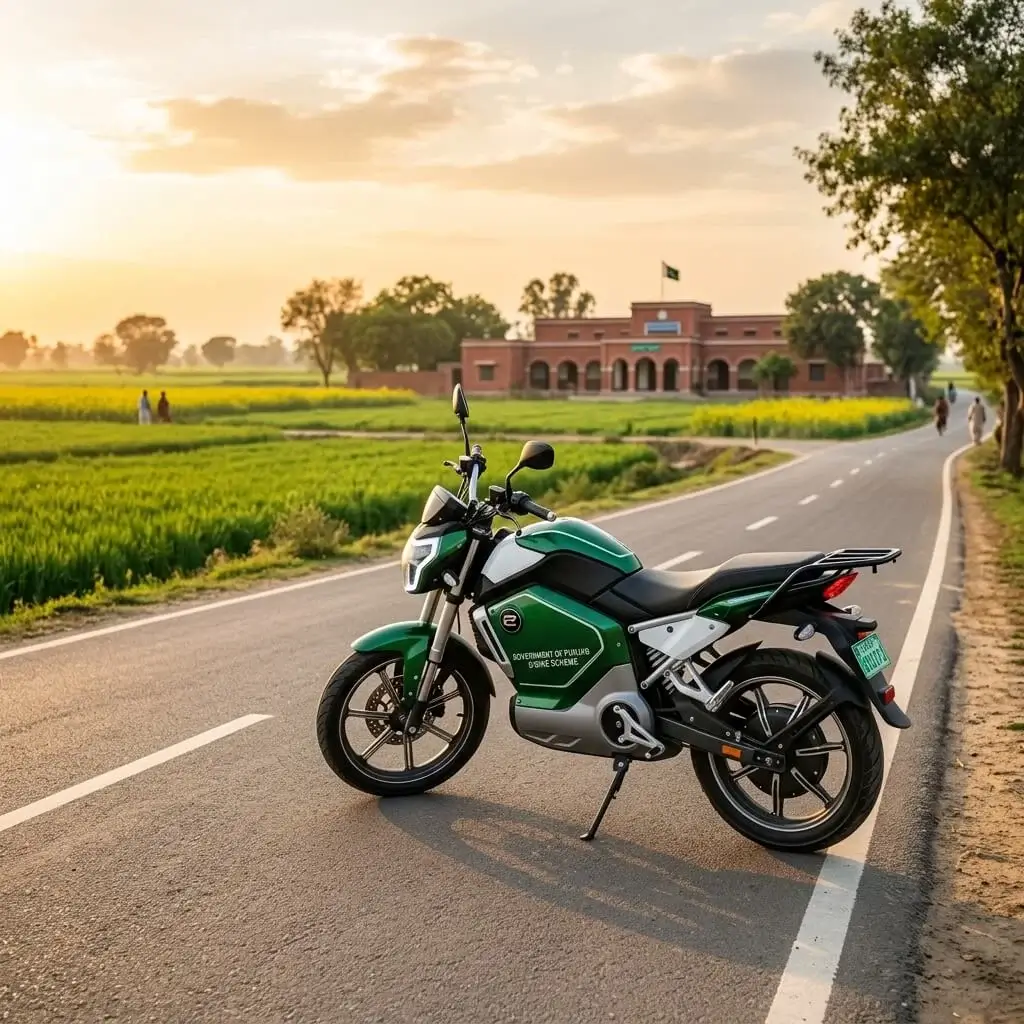
The CM Punjab E-Bike Teacher Scheme 2026 directly addresses this problem by giving rural teachers a personal, reliable, and affordable mode of transport. An electric bike with a range of 70 to 110 kilometers per charge can comfortably handle a 40 to 80 kilometer round-trip commute without needing a mid-day recharge. The teacher controls their departure time, route, and speed — no more waiting for unreliable buses or negotiating fares with private van drivers.
The practical impact is immediate. A teacher who previously spent 90 minutes waiting for and riding public transport can now complete the same journey in 30 to 40 minutes on an e-bike. This time saving of nearly an hour each way translates to two additional hours per day that the teacher can spend on lesson preparation, student interaction, or personal rest — all of which improve teaching effectiveness.
Cost Savings That Matter for Rural Families
Rural teachers earn the same government salary as their urban counterparts, but their effective income is lower because a larger share goes toward commuting costs. A teacher spending Rs. 300 per day on private transport burns through Rs. 6,600 per month — nearly 15 to 20% of a BPS-14 teacher's basic pay. Over a career spanning 25 years, this represents over Rs. 2 million spent just on getting to work.
An e-bike eliminates this drain almost entirely. The electricity cost for daily charging is Rs. 60 to Rs. 100, which translates to Rs. 1,500 to Rs. 2,500 per month. Combined with the zero-interest installment of Rs. 3,600 to Rs. 4,200 per month, the total cost of owning and operating the bike is comparable to what the teacher was already spending on transport. After the installment period ends in 36 months, the monthly commuting cost drops to just the electricity charge, freeing up Rs. 4,000 to Rs. 5,000 per month for household expenses, children's education, or savings.
Impact on Student Attendance and Learning
When teachers arrive on time, students benefit directly. Schools with consistent teacher presence report 25 to 30 percent higher student attendance rates, because parents are more likely to send their children when they know the teacher will actually be there. In rural areas where families weigh the opportunity cost of sending a child to school versus having them help with farm work, teacher reliability is a critical factor in the parents' decision.
The ripple effect extends beyond attendance. A teacher who arrives fresh and on time delivers better lessons, engages more actively with students, and has the energy to conduct after-school tutoring sessions that are critical for weaker students. Schools in pilot districts where e-bikes were distributed earlier have reported a measurable improvement in Grade 5 and Grade 8 standardized test scores within just one academic year.
Real Stories from the Ground
Consider the situation of a female PST teacher posted in a village school in Rajanpur district. Her home is 25 kilometers from the school, and the only available transport is a Suzuki pickup that leaves from the main town once in the morning and returns once in the afternoon. If she misses the morning pickup, she has no way to reach school that day. During the monsoon season, the unpaved road becomes impassable for vehicles, adding weeks of forced absences to her record.
With an e-bike, this teacher gains complete independence over her commute. She can leave home at her preferred time, take alternative routes when the main road is waterlogged, and return home immediately after school instead of waiting hours for the return pickup. The psychological relief alone — knowing that she will not be marked absent through no fault of her own — has a transformative effect on her job satisfaction and long-term commitment to the profession.
The Bigger Picture
Impact: E-bikes are not just a personal benefit for teachers — they are an investment in Punjab's rural education system. Reliable teacher attendance leads to better student outcomes, higher literacy rates, and stronger communities. The CM Punjab E-Bike Scheme is connecting classrooms to teachers, one bike at a time.