 PTF Punjab
Why Demand Exceeds Supply: Understanding E-Bike Scheme Quotas
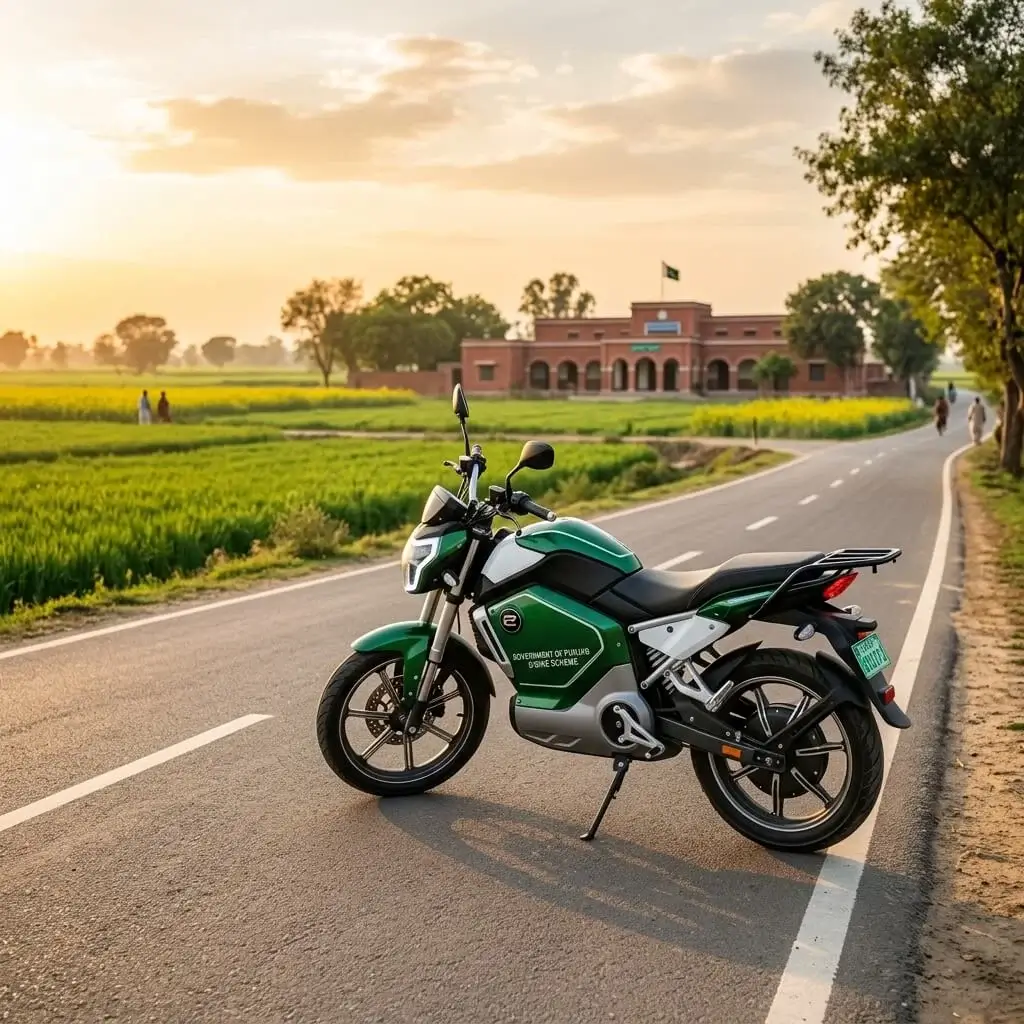
The Scale of Demand vs Available Supply
Punjab has over 400,000 government school teachers spread across 36 districts. The CM Punjab E-Bike Teacher Scheme 2026 allocates 15,000 electric bikes in total across two phases — 5,000 in Phase 1 and 10,000 in Phase 2. Even if only a quarter of eligible teachers apply, the applicant pool exceeds 100,000, making the competition ratio approximately 7 applicants per available bike. In reality, initial registration data suggests that demand is even higher, with preliminary interest exceeding 150,000 teachers, pushing the competition ratio toward 10:1.
This supply-demand gap is not a flaw in the scheme design — it is a reflection of genuine need. Government school teachers across Punjab overwhelmingly rely on petrol motorcycles or public transport for daily commuting, and the financial and practical appeal of a subsidized e-bike with 0% interest financing is enormous. The challenge for the Punjab Teachers Foundation is to distribute a limited resource in the fairest possible way, which is precisely why the transparent computerized balloting system was adopted instead of a first-come-first-served or subjective selection approach.
How District-Level Quotas Are Determined
The 15,000 e-bikes are not distributed through a single province-wide draw. Instead, the PTF allocates a specific quota to each of the 36 districts based on a weighted formula that considers three main factors: the total number of government teachers in the district, the proportion of teachers serving in rural and remote schools, and the average commuting distance and transport infrastructure in the district. This formula ensures that districts with greater need receive a proportionally larger share of the allocation.
For example, Lahore has the largest teacher population in Punjab but also has the best public transport infrastructure and shortest average commuting distances. It receives a quota proportional to its teacher count but not inflated for need, since urban transport alternatives exist. In contrast, Rajanpur has fewer teachers but extremely poor transport infrastructure and long commuting distances. It receives a proportionally higher quota relative to its teacher population because the need per teacher is significantly greater. This weighted allocation is reviewed and adjusted between Phase 1 and Phase 2 based on actual application data.
Why the Government Cannot Simply Increase Supply
The most common question from teachers who learn about the quota limitations is: why not just make more bikes available? The answer involves three interrelated constraints. First, budget: each e-bike costs Rs. 200,000 to Rs. 250,000, of which the government subsidizes 30-40%. For 15,000 bikes, the total subsidy bill exceeds Rs. 1.2 billion. Doubling the supply would require doubling this allocation from the provincial budget, competing with other essential expenditures like healthcare, infrastructure, and education salaries.
Second, manufacturing capacity: the approved e-bike manufacturers have limited production lines and cannot scale output overnight. Pakistan's electric vehicle manufacturing sector is still developing, and producing 15,000 bikes that meet PTF quality standards within the scheme timeline already stretches domestic capacity. Third, administrative bandwidth: verifying applications, conducting balloting, processing bank documentation, and managing delivery for 15,000 beneficiaries requires significant coordination across PTF, BOP, SED, and 36 district offices. Expanding the program too fast risks quality and integrity problems.
What Happens to Non-Selected Applicants?
Teachers who are verified but not selected in Phase 1 are not permanently excluded. Their verified applications automatically carry forward into the Phase 2 applicant pool without requiring resubmission. They retain their original priority weightage (gender, rural posting, first-time status) and compete alongside new Phase 2 applicants in the next balloting draw. Since Phase 2 allocates 10,000 bikes compared to Phase 1's 5,000, the odds improve somewhat for carryover applicants.
If a teacher is not selected in Phase 2 either, the government has indicated that future phases may be announced subject to budget availability and program evaluation. However, no formal commitment for Phase 3 exists at this time. Teachers should treat Phases 1 and 2 as the confirmed opportunities and apply with complete, accurate documentation to maximize their chances in the draws that are guaranteed to happen.
Understanding Why Quotas Feel Unfair
It is natural for teachers who are not selected to feel disappointed or question the fairness of the system. Some wonder if the process is truly random or if connections and influence play a role. The PTF has addressed these concerns by conducting the balloting under multi-party supervision (PTF, BOP, SED, and independent observers), recording the entire draw process, publishing district-wise results on the portal, and providing a grievance mechanism for teachers who suspect irregularities.
The reality is that in any lottery-style distribution system, the majority of participants will not be selected in any single round. With a 10:1 competition ratio, 90% of applicants must necessarily be non-selected. This does not mean the system is unfair — it means the resource is scarce relative to demand. The balloting ensures that the 10% who are selected represent a genuinely random, unbiased cross-section of the eligible pool, with appropriate priority weightage for the most disadvantaged groups.
Looking Ahead: The Road to Universal Coverage
The current scheme is a starting point, not the final destination. If Phases 1 and 2 succeed in demonstrating that e-bikes are reliable, affordable, and beneficial for teachers, the government has a strong case for expanding the program through additional budget allocations, partnerships with international climate finance organizations, and cost reductions as Pakistan's electric vehicle manufacturing capacity grows. The long-term vision is to make subsidized electric transportation accessible to all public sector employees, not just teachers.
Quota Reality Check
Total Bikes: 15,000 (Phase 1: 5,000 + Phase 2: 10,000)
Estimated Applicants: 100,000-150,000+
Competition Ratio: ~7-10 applicants per bike
Not Selected? Your verified application carries forward to Phase 2 automatically
Future Phases: Possible but not yet confirmed — apply now for the guaranteed opportunity.